The Infantilization of Adults

David
Writer
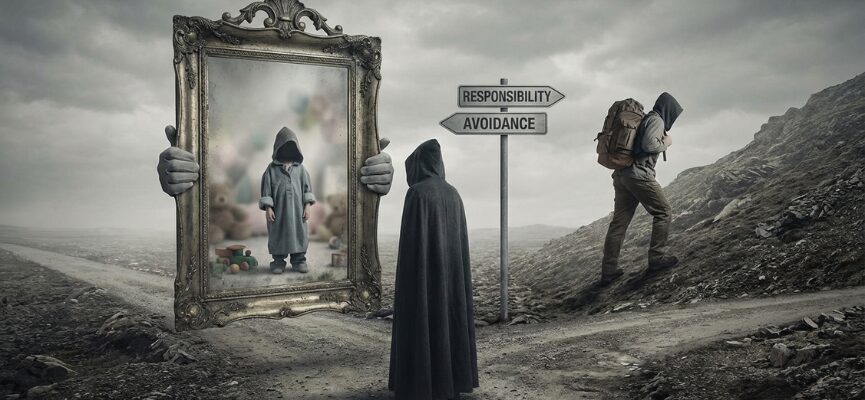
We’re living through a weird inversion. People talk about empowerment nonstop, yet more and more adults seem allergic to the basic burdens of adulthood: self control, delayed gratification, personal responsibility, emotional endurance. We demand freedom but outsource the consequences. We want autonomy but also want someone to guarantee we never feel discomfort, failure, rejection, or uncertainty. And the scariest part is this: modern society often rewards that stance. Not always with money, but with moral status, attention, and protection.
Here’s the uncomfortable question that cuts through the noise, and you already nailed it:
Am I actually oppressed, or am I avoiding responsibility?
That question isn’t a right wing slogan or a “bootstrap” sermon. It’s a psychological mirror. It forces you to separate two things that get intentionally blended: genuine structural injustice, and the human tendency to dodge accountability by adopting a permanent identity of victimhood.
This article is about a trend you can feel everywhere: the infantilization of adults, the slow social conditioning that turns grown people into large children, emotionally reactive, dependency-oriented, and increasingly incapable of sustaining freedom.
What “infantilization” actually means
Infantilization is not “being immature sometimes.” Everyone is immature sometimes. Infantilization is a pattern, a cultural direction.
It looks like this:
- Discomfort is treated as harm.
- Offense is treated as violence.
- Struggle is treated as trauma by default.
- Responsibility is reframed as oppression.
- Authority is hated, except when it protects me from reality.
An adult is someone who can carry weight without needing to turn it into a performance, a complaint, or a political identity. Infantilization is the opposite: it teaches you that if something feels hard, it must be unfair, and if it’s unfair, someone else must fix it.
This is why modern language matters. We’ve expanded the vocabulary of harm so far that regular life now sounds like a war crime. And once everything becomes “harm,” the logical demand becomes endless protection.
Protection is not always evil. But here’s the trade: the more you demand protection from life, the less capable you become of living it.
Why this is happening now, not 50 years ago
This isn’t just “kids these days.” That’s lazy. This is systemic.
Three forces feed this era’s infantilization:
- Comfort without competence
- Therapeutic culture without moral culture
- Politics, media, and platforms that profit from dependency
In earlier eras, life was harder, and the expectation was that you’d harden with it. Today, life can be materially easier while psychologically harder, because the mind isn’t trained to withstand discomfort, it’s trained to interpret discomfort as proof of injustice.
And when a society teaches you that your emotional states are always someone else’s responsibility, you create adults who don’t grow up, because growing up requires owning your inner life.
The four forces involved: State, Institutions, Society, Individual
This problem isn’t personal. It’s political, cultural, and psychological all at once. Let’s break it down like a real system.
1) The State: the caretaker becomes the parent
The modern state increasingly positions itself as a caretaker. Sometimes that’s necessary. Sometimes it’s genuinely humane. But the dynamic can become parental.
A parental state does two things:
- It encourages dependency because dependency increases compliance.
- It redefines citizenship from responsibility to entitlement.
The child-state relationship is not built on equal agency. The child is protected, but also controlled. The parent sets the rules. That’s fine for children. It’s corrosive for adults.
When citizens start behaving like children, politics turns into a constant demand for soothing. People stop asking “what is good policy,” and start asking “what makes me feel safe.” Politicians learn quickly: you don’t have to solve problems, you just have to narrate emotional security and identify a villain.
This is where mass politics becomes manipulation. Leaders stop governing and start parenting: comforting one group, scolding another, promising punishment, promising gifts. The citizen becomes a dependent client, not a responsible participant.
2) Institutions: moral status replaces excellence
Institutions, especially universities, corporations, and media organizations, have learned that moral posturing is cheaper than competence.
If an institution can present itself as “caring,” it can often avoid doing the harder work of producing strong results, honest truth, or resilient people.
Institutions infantilize in subtle ways:
- They lower standards but call it “inclusion.”
- They replace debate with safety language.
- They reward sensitivity over strength.
- They treat adults like fragile liabilities.
This doesn’t create equality. It creates a soft tyranny of emotional policing, where people must constantly monitor what they say, not because they’re aiming for truth or virtue, but because they fear social punishment.
That fear doesn’t mature people. It creates conformists with anxiety, people who never fully develop a backbone.
A society that cannot tolerate speech it dislikes is not compassionate. It’s insecure. And insecurity always produces control.
3) Society: the cultural reward system got hijacked
Society teaches people what gets rewarded. Today, a lot of people learn, consciously or not:
- If you look strong, nobody cares.
- If you look wounded, everyone listens.
- If you take responsibility, you get more responsibility.
- If you claim harm, you get protection and moral authority.
This is not a moral judgment. It’s a description of incentives.
Social media amplified this because platforms reward emotion and identity, not responsibility and nuance. Outrage spreads. Victim narratives spread. Complexity dies. So people learn to speak in the currency that gets attention: pain, anger, accusation, and moral certainty.
You can see it in everyday life. People don’t just say “I’m stressed.” They say “I’m traumatized.” They don’t say “I feel disrespected.” They say “I’m unsafe.” They don’t say “I failed.” They say “the system did this to me.”
Sometimes the system did. Many times it didn’t.
But the point is the default posture has shifted from “I can handle life” to “life must adjust to me.”
That shift is not liberation. It’s regression.
4) The Individual: freedom is heavy, and most people drop it
Here’s the part nobody wants to admit: infantilization works because it offers a deal many people secretly want.
The deal is:
- You get emotional relief.
- You get a moral excuse.
- You get to avoid the brutal task of self discipline.
- In exchange, you give up agency.
Freedom is not just “I do what I want.” Freedom is the capacity to govern yourself. That requires:
- controlling impulses
- tolerating frustration
- delaying gratification
- taking responsibility for your choices
- being willing to be disliked
Most people want the aesthetic of freedom, not the weight of it.
That’s why many people replace freedom with something easier: permission. They don’t want to be free, they want to be approved.
And approval is always controlled by the crowd, the institution, or the state. So even when people claim they’re liberated, they’re often the most psychologically controlled generation in history: controlled by validation metrics, ideology, group belonging, and constant emotional regulation from outside.
An adult doesn’t need the world to agree with them to function. A child does.
The oppression trap: when a real concept becomes a personality
Let’s say the quiet part out loud:
Some people are genuinely oppressed.
Poverty, corruption, discrimination, violence, and nepotism are real. In places and communities, people don’t need a theory to know the system can be brutal.
But here’s what also happens:
Oppression becomes a universal explanation, and when that happens, it becomes a psychological addiction. Because it can explain everything without requiring you to confront yourself.
If I’m always oppressed, then:
- I never have to admit I chose comfort over effort.
- I never have to admit I wasted time.
- I never have to admit I avoided risk.
- I never have to admit I lack discipline.
- I never have to admit I stayed small because it was safe.
And that’s the deadly part: a real concept gets weaponized against growth.
So the question becomes practical, not ideological:
Is this obstacle external, or internal?
And if it’s internal, are you using “oppression” as a shield against the shame of your own avoidance?
That doesn’t mean the system is fair. It means your life is still yours.
Why dependency is profitable
This is where it gets cold.
A mature adult is harder to control.
A mature adult can:
- handle discomfort
- think long term
- resist manipulation
- tolerate ambiguity
- act without applause
- take responsibility
That person is dangerous to systems that feed on fear, impulse, and attention.
On the other hand, a dependent adult is easy:
- They need constant reassurance.
- They outsource meaning to ideology.
- They buy things to fill the emptiness.
- They want someone to blame.
- They want someone to rescue them.
That’s not an insult. That’s a business model.
Modern capitalism doesn’t just sell products, it sells emotional regulation. “Buy this to feel better.” Modern politics doesn’t just sell policy, it sells emotional narratives. “Vote for me to feel safe.” Modern platforms don’t just connect people, they monetize volatility, because volatility keeps you scrolling.
So yes, there are people and systems that benefit when you stay psychologically young.
What adulthood actually demands in this era
Adulthood today isn’t about being stoic all the time or never complaining. It’s about refusing to let your suffering become your identity.
It means choosing the harder truth:
- Your feelings matter, but they are not your master.
- Your past matters, but it is not your destiny.
- The system matters, but it is not your excuse.
- Your pain is real, but it is not a moral crown.
If you want to be free, you need more than rights. You need capacity.
Capacity is built through:
- Voluntary discomfort
Doing hard things on purpose, not because life forced you. - Delayed gratification
If you can’t wait, you can’t build. - Ownership of your inner life
Stop making your anxiety, anger, or boredom someone else’s job to fix. - Selective sensitivity
Not everything deserves a response. Most things deserve discipline. - Building competence
Competence is anti-fragility. The more capable you are, the less you need constant protection.
Key takeaway
Modern society increasingly rewards dependency and punishes maturity, and the most radical move you can make is to reclaim adulthood: build competence, tolerate discomfort, and stop using the language of oppression to excuse what is often, in the end, avoidance.
Here’s the truth people avoid because it offends modern sensibilities:
Many adults today are not oppressed, they are underdeveloped.
Not intellectually, but psychologically. They were not trained to carry freedom, so they interpret freedom as chaos, and they beg for control disguised as “care.”
A society full of underdeveloped adults will always drift toward authoritarianism, not necessarily because a dictator arrives, but because people start demanding someone take the wheel. People who can’t govern themselves will eventually ask to be governed.
If you want to resist that, the answer isn’t just better politics. It’s better people.
Adulthood is not a vibe. It’s a discipline.
So ask the question again, and don’t answer it like a politician. Answer it like a person looking in the mirror:
Am I actually oppressed, or am I avoiding responsibility?
Because if you’re avoiding responsibility, the solution is not a revolution.
It’s growing up.