The Burden of Freedom

David
Writer
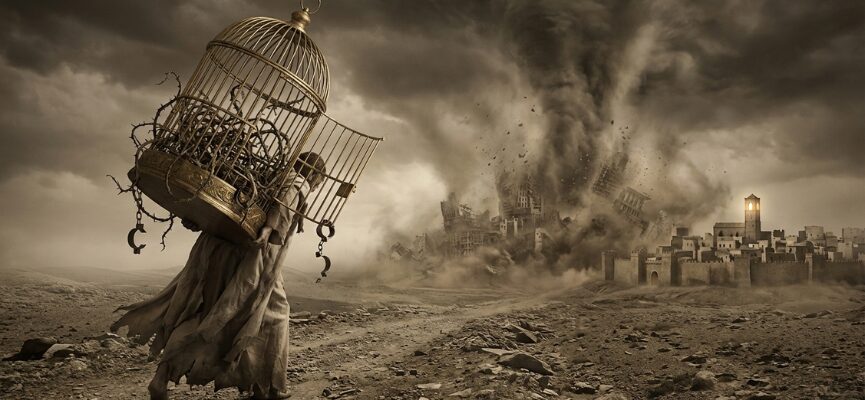
Society treats freedom as if it were a universal gift, but freedom is not a gift, it is a psychological stress test. It strips away external authority and forces the individual to confront their own mind, their habits, their impulses, their future, and their limitations. And when the world removes all constraints, only some people stand. Others fall into addiction, chaos, resentment, or despair. This is the truth modern democracies refuse to face: most people are not fit for complete autonomy, and distributing freedom without measuring capability does not elevate society, it destabilizes it.
What Freedom Really Is: The Psychological Definition
Freedom is not simply the right to speak, vote, work, or dress however one wants. Freedom is the removal of external structure. When the state steps back, when institutions relax their grip, when society stops enforcing norms, and when families lose control, the individual stands alone with their own internal authority. Most people are terrified by this. As Erich Fromm wrote, humans “escape from freedom” because it forces them to shoulder responsibility for their own existence. Freedom requires discipline, foresight, and emotional strength. It is not moral, it is psychological, and when people treat it as a birthright instead of an achievement, chaos begins.
The Biological Inequality of Minds
Human beings are not cognitively or emotionally equal. This is not prejudice, it is neurology. Executive function varies dramatically across individuals. Some brains are wired for impulse control, planning, and abstract reasoning. Others are dominated by emotional reactivity, short term gratification, or fear responses. Temperament differences, intelligence distribution, and developmental factors all shape how much autonomy a person can handle before they self destruct.
Freedom intensifies these inequalities because it magnifies internal traits. A person with strong prefrontal cortex function can navigate autonomy with strategic clarity. A person with weak regulation falls into disorientation and impulsivity. Freedom does not equalize humanity. It stratifies it.
What Makes a Person Fit or Unfit for Freedom
A person fit for freedom possesses several measurable traits. They can delay gratification, control impulses, accept responsibility, tolerate discomfort, regulate emotion, think long term, and operate under principles rather than moods. They are capable of obeying themselves, as Nietzsche would say.
A person unfit for freedom exhibits the opposite traits. They rely on external structure because internal regulation is weak. They fear uncertainty, seek instant pleasure, follow emotion over logic, collapse without routines, and blame others for their failures. They require guidance in order to function. Autonomy overwhelms them, and they interpret the consequences of their own behavior as oppression.
Freedom as Psychological Violence for the Unprepared
For someone unfit for autonomy, freedom is not liberating, it is traumatic. It removes the protective guardrails that their psyche depends on. Without structure, they fall into addiction, depression, identity fragmentation, or nihilism. This is why free societies have high rates of anxiety disorders, self harm, and substance abuse. Freedom demands an internal discipline that many people simply do not have.
Nietzsche understood this. When he wrote that “he who cannot obey himself will be commanded,” he meant that freedom requires an inner commander strong enough to replace external authority. Without that commander, the mind becomes a battlefield of impulses. Freedom becomes psychological violence.
The Four Layers That Determine Who Can Handle Freedom
Freedom is regulated by four layers of authority. When all four function, society thrives. When all four collapse, freedom becomes destructive.
1. The State
The state sets the legal boundaries of autonomy. It determines who can vote, drive, own property, or participate in governance. It filters fitness crudely but effectively. Modern states weakened these filters to appear inclusive, resulting in large groups of individuals with low self regulation gaining significant power.
2. Institutions
Schools, workplaces, banks, courts, and the military historically filtered people by competence and discipline. These structures revealed who could handle responsibility. Modern institutions have lowered standards in the name of equality, which means they no longer differentiate between the fit and the unfit.
3. Society
Communities once enforced behavioral norms through shame, reputation, and expectation. Today society refuses to regulate behavior because norm enforcement is seen as oppressive. Without cultural pressure, the unfit have no external stabilizer to counteract their impulses.
4. The Individual
The final and most important layer. The internal authority that says no, not yet, do better, accept consequences, stay focused. The modern individual is psychologically weaker than previous generations due to comfort, distraction, and avoidance of hardship. When individuals cannot regulate themselves, freedom collapses from within.
This is the first era in history where all four layers weakened simultaneously. The result is predictable instability.
When the Unfit Become the Majority
Democracy becomes fragile when emotional, reactive, or impulsive individuals gain political power through sheer numbers. Demagogues rise. Fear based voting dominates. Policies become short sighted, financially irresponsible, and psychologically appeasing rather than stabilizing. When the unfit become the majority, leaders are forced to cater to fragility, not competence. The state then bends to emotional demands rather than rational needs. This is how free societies slide into disorder without realizing it.
The Ethical Dilemma: Protect or Abandon the Unfit
This is the heart of the moral problem.
If a society protects unfit individuals from the consequences of their own behavior, it creates dependency and resentment. If it refuses to protect them, it creates suffering and resentment of another kind. Compassion is costly. Abandonment is cruel. There is no painless answer.
But one truth stands: if everyone is granted maximum freedom, the weak collapse and the strong are restrained by the dysfunction of others. A society must decide whose wellbeing takes priority, the capable or the incapable. Modern democracies pretend the two can be served equally, but history proves otherwise.
The Path Forward: Freedom as an Earned Capability
The only sustainable model is one where freedom expands with demonstrated competence. Everyone begins with basic autonomy, but higher levels of freedom must be earned through behavior, not ideology. This means restoring standards in institutions, reinforcing norms in society, strengthening internal discipline in individuals, and grounding the state in behavioral evidence rather than wishful thinking.
A society that aligns freedom with capability preserves stability without crushing excellence. A society that distributes freedom without measure accelerates collapse.
A culture cannot reward excellence while denying the inequalities required to recognize excellence.
Key Takeaway
Freedom is not a universal human condition but a psychological capability that only some people possess. When societies grant autonomy without evaluating competence across the state, institutions, society, and the individual, freedom becomes a force of instability rather than growth. The health of a culture depends not on how widely freedom is distributed, but on how wisely it is given.
Human beings were not designed for complete autonomy. We evolved under hierarchy, constraint, and communal structure. The modern experiment of universal freedom assumes a level of internal regulation that most people simply do not have. The result is a world where the capable bear the costs of the incapable, where freedom reveals weakness instead of creating strength, and where societies unravel because they refuse to acknowledge the psychological inequalities within their citizens.
If freedom is to survive, it must be treated not as a moral entitlement but as a responsibility tied to competence. The future belongs to societies that understand this. Those that ignore it will drown in their own illusions, mistaking the collapse of self governance for the failure of freedom itself.