When Democracy Outgrows Reality

David
Writer
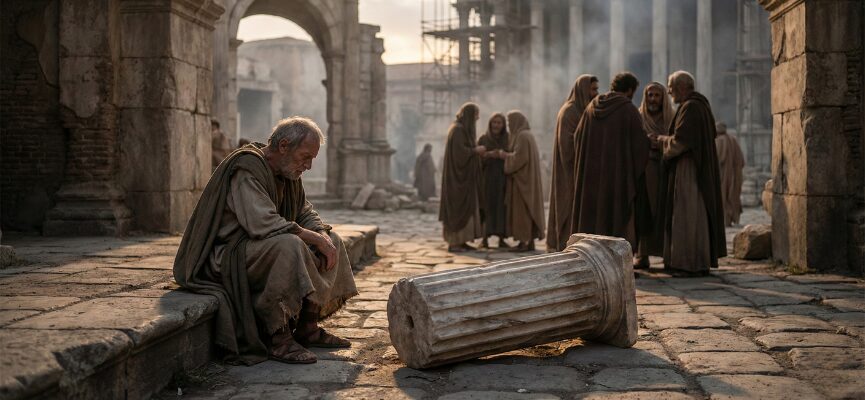
Democracy has been treated for decades as the political equivalent of oxygen. You do not question it, you do not critique it, you certainly do not imply it might be harming the very societies it is supposed to protect. Yet beneath the polite superficiality of civic faith, people across the world are thinking a forbidden thought: maybe this system, in its current form, no longer works. Maybe it empowers the very impulses and irrationalities it was meant to restrain.
The issue is not that democracy is evil. The issue is that democracy assumes citizens are capable of a level of knowledge, responsibility, and moral clarity that most people do not possess. This is the part no politician, no activist, and very few academics will say out loud, because admitting it feels like betraying civilization itself.
But if we refuse to confront the truth, the truth eventually confronts us.
The Foundational Problem: Democracy Requires Competence, but Guarantees Incompetence
Modern universal suffrage was built on an Enlightenment fantasy. It assumed the average person, once freed from kings and granted a vote, would become rational, informed, civic minded and capable of choosing leaders who pursue the common good. History, psychology, and daily observation say otherwise.
Most citizens, regardless of country or education level, vote according to:
- fear
- identity and tribe
- emotional rewards
- moral impulses with no factual basis
- punishment of perceived enemies
- short term gratification
- stories they want to believe rather than truths they want to confront
In other words, people vote like humans, not philosophers.
Plato understood this with uncomfortable clarity. In The Republic he compared democracy to letting passengers vote on how to navigate a ship. His point still stands. Expertise is irrelevant in a system where charisma, tribalism, and emotional manipulation outperform competence every time.
And the educated vs uneducated debate makes the problem even darker. We want to believe that education produces better voters. Sometimes it does. Often it does not. Some of the most dangerous and ideologically rigid individuals have graduate degrees. Conversely, many of the wisest people who understand real world consequences have no formal schooling at all.
If we restrict voting based on education, we run into questions that no society can answer cleanly.
What counts as education?
Does education equal wisdom, or merely indoctrination?
Who judges the examiners?
How do we prevent elites from defining education in their own favor?
How do we deal with educated citizens whose moral compass is bent?
Democracy promises fairness, yet produces irrationality. Any alternative promises rationality, yet produces tyranny. This is the political version of a moral trap.
The Moral Problem: Fairness vs Outcomes
Democracy survives not because it works well, but because it feels morally correct. The idea that every citizen has equal political worth appeals to our deepest instincts for fairness. The problem is that fairness and good outcomes rarely align.
Uneducated or misinformed people can vote for policies that harm themselves and everyone else. The educated can do the same, but with more sophisticated justifications. The moral weight of universal suffrage blinds us to the consequences. When fairness becomes unquestionable, reason becomes optional. Democracy becomes a religion, not a tool.
The philosopher José Ortega y Gasset warned about this in The Revolt of the Masses. Once the average citizen believes his uninformed opinion has the same political authority as informed judgment, society begins to drown in entitlement. People demand power without responsibility, rights without duty, and political influence without understanding the systems they are trying to shape.
Modern democracies show exactly this pattern.
The Psychological Problem: Humans Are Not Built for Democratic Responsibility
Democracy requires rational, reflective, self disciplined citizens. Psychology tells us that humans are emotional, biased, tribal, and easily manipulated. Social media weaponizes these weaknesses. Populism becomes inevitable. Extremism becomes profitable. Voters act like fans choosing teams, not adults making decisions that affect millions.
Nietzsche once said, “Madness is rare in individuals, but in groups, parties, nations, and ages, it is the rule.” Democracy is the political expression of this collective psychology. It assumes maturity and produces emotional volatility. It demands long term thinking and rewards short term impulses.
The system does not collapse because it is flawed. It collapses because humans are.
The Search for Alternatives: Imperfect Systems for an Imperfect Species
Rejecting democracy leads nowhere unless we explore alternatives. None of them are perfect. All of them involve trade-offs. But each attempts to address democracy’s central flaw: equal political power without equal political competence.
Below are the main hybrid models political theorists and philosophers have explored, expanded for clarity and honesty.
1. Epistocracy: Rule of the Knowledgeable
Proposed most strongly by Jason Brennan in Against Democracy. People retain the right to vote, but influence is weighted by demonstrated political knowledge.
Example structures:
- Every citizen gets one vote.
- Additional votes awarded for passing civic tests or demonstrating advanced policy understanding.
This is not elitism by birth or wealth, but by competence.
Strengths:
- Reduces uninformed emotional voting.
- Encourages citizens to become informed.
- Limits the destructive power of ignorance.
Weaknesses:
- Who designs the tests?
- How do we ensure neutrality?
- Does knowledge equal moral judgment or wisdom?
- Could elites rig the criteria to maintain power?
Epistocracy solves one problem and risks creating another. But it attempts to fix the core democratic failure without abolishing participation.
2. Sortition: Random Selection of Citizens for Political Power
Used in ancient Athens and supported today by thinkers like David Van Reybrouck.
Citizens are selected by lottery, much like jury duty, to serve in political positions. They receive training and guidance from experts, then legislate or deliberate.
Strengths:
- Breaks the career politician cycle.
- Reduces corruption since no one fights for power if power comes by chance.
- Produces representative sampling of citizens.
- Minimizes emotional manipulation by removing elections entirely.
Weaknesses:
- Random people may be unprepared for complex issues.
- Some may refuse or be incapable of serving.
- Requires heavy expert oversight which reintroduces elite influence.
Still, sortition may outperform elections which reward charisma and tribal loyalty over genuine understanding.
3. Weighted Voting by Stake: Skin in the Game Democracy
Inspired by Nassim Taleb. People with greater exposure to the consequences of decisions receive greater influence on those decisions.
Examples:
- Parents get more influence on education policy.
- Business owners get more say on regulatory or economic matters.
- Younger generations get more influence on long term policy.
- Elderly voters have less weight on decisions affecting generations they will not live to experience.
Strengths:
- Aligns political influence with responsibility.
- Discourages impulsive voting by those with nothing to lose.
- Encourages long term thinking.
Weaknesses:
- How do we quantify stake?
- Could wealth distort influence?
- Who defines fairness?
Yet this model directly confronts democracy’s original sin: people voting for outcomes they will not personally bear.
4. Voluntary Competence Exams: Earned Voting Power
A softer form of epistocracy. Every citizen gets one vote, but can earn additional voting power by completing civics modules or policy comprehension exams.
No one loses the right to vote. People only gain influence if they choose to.
Strengths:
- Removes elitist gatekeeping.
- Rewards effort rather than background.
- Improves overall voter competence without coercion.
Weaknesses:
- Still requires exam design, which can be biased.
- Creates political stratification even if voluntary.
This system keeps the moral legitimacy of universal suffrage while acknowledging that not all voters contribute equally to political health.
The Underlying Truth No System Can Escape
Every political system eventually runs into the limits of human psychology. Democracy collapses under voter irrationality. Aristocracy collapses under corruption. Technocracy collapses under detachment and authoritarian drift. Hybrid systems extend functionality, but none eliminate the problem.
The issue is not democracy itself. The issue is the citizen. We have built a system that depends on virtues that humans rarely demonstrate and capacities that most people never develop.
If democracy is to survive the 21st century, it must evolve. If it refuses, it will sink under the weight of its own ideals.
Key Takeaway
Democracy fails when it assumes citizens possess the knowledge, maturity, and moral stability required to wield equal political power, yet offers no mechanism to distinguish wisdom from ignorance or responsibility from impulse; the result is a system that treats fairness as sacred even when it produces irrational outcomes, and while hybrid alternatives try to balance competence with inclusion, they cannot overcome the deeper truth that human psychology itself is the weak link in any democratic model.
Democracy’s crisis is not a sudden malfunction, it is the slow realization that a system built on the ideal of rational, informed citizens has outgrown the psychological and moral capacities of the population it governs. The challenge is not merely political, it is anthropological. When everyone is granted influence but few understand the consequences of their choices, society becomes a stage where emotions dictate policy and collective moods override long term thinking. The tension between fairness and competence will never be resolved cleanly, because protecting equality often requires accepting mediocrity, and protecting good governance often requires limiting voices. This contradiction forces us to confront an uncomfortable reality. No political system can rise above the people who operate it. Democracy’s future therefore depends not on defending its current form, but on reimagining the citizen who participates in it. Whether through education, responsibility, or new hybrid structures, societies will eventually need to evolve their understanding of what political maturity means. Until then, democracy will remain an aspirational ideal caught in a world that no longer matches its assumptions, a system noble in theory, yet fragile under the weight of human nature.